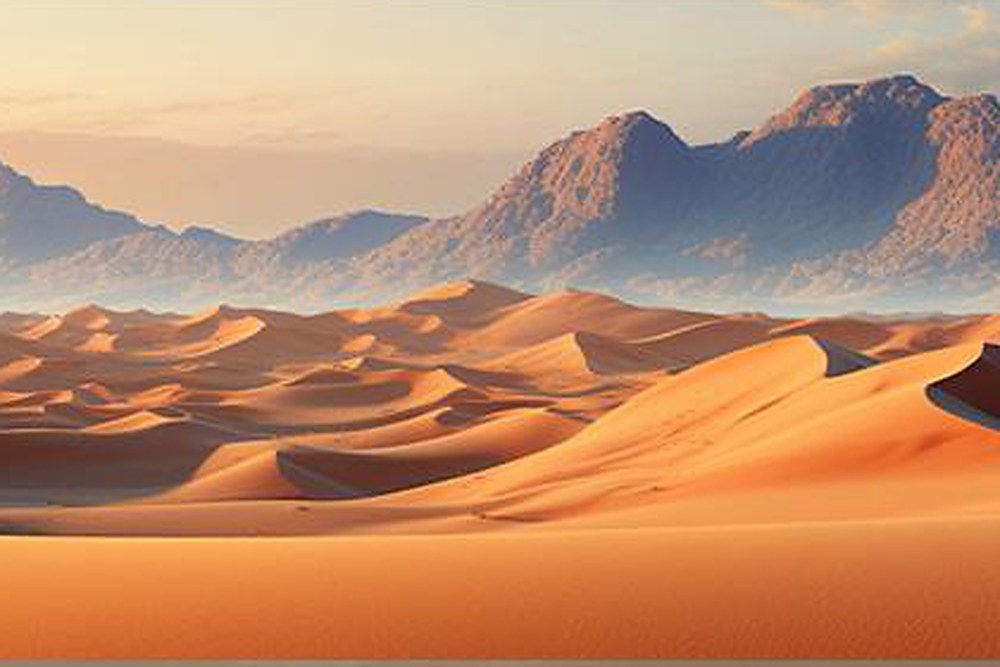
The five-day crossing with a genuine extra day added at the desert end. You keep the Qilian viewpoints, the Danxia ridges and the Jiayuguan overnight, then give Dunhuang the time it deserves: a full day for the Mogao Caves and sunset on the dunes, followed by the two Han dynasty gates west of town – Yangguan and the Jade Gate – before a relaxed departure on Day 6.
Why this trip
- A genuinely private journey: your own vehicle, your own English-speaking guide, no shared group and no shopping stops
- Hand-picked four-star hotels with breakfast, in the right town each night rather than at the end of a long transfer
- A private luxury 9-seat MPV with reclining leather seats, generous legroom and USB charging on every road day
- 24-hour meet-and-greet at Xining Caojiabao Airport (XNN) or Xining railway station
- A one-way route – Xining in, Dunhuang out – so you never backtrack across the plateau or the corridor
- Mogao Caves reservations handled for you, including the digital exhibition centre and the site guide
- Complimentary drone footage over the grassland ridges and the desert, wherever local rules allow
- Complimentary Dunhuang Flying Apsaras photo experience with costume and photographer
- A real sixth day at Yangguan and the Jade Gate, the Han dynasty gates west of Dunhuang
- Two nights in Dunhuang with the caves and the dunes on separate days, plus the Flying Apsaras photo session
Route at a glance
Xining – Daban Viewpoint – Qilian Grassland – Zhangye – Jiayuguan – Dunhuang – Yangguan & Yumen Passes. Xining in, Dunhuang out – a one-way journey from the plateau to the desert, with no backtracking. Travel is by private 9-seat MPV with your own English-speaking guide throughout.
Day by day
Day 1 – Arrival in Xining
Overnight: Xining
- Your journey begins in Xining, the plateau gateway at 2,261 m. A team member contacts you the day before with your driver’s name and number.
- 24-hour meet-and-greet at Xining Caojiabao International Airport (XNN) or Xining railway station, followed by a private transfer to your hotel.
- Check in to a hand-picked four-star hotel. The rest of the day is deliberately light: a short walk along the Huangshui River, the Dongguan Grand Mosque quarter, or a bowl of hand-pulled beef noodles.
- A little local butter tea is a traditional way to ease into the altitude. Go easy on alcohol on your first evening.
Good to know: Please send passport details early so Mogao Caves tickets can be reserved about 30 days ahead. Take this first day gently – tomorrow crosses the Qilian passes above 3,500 m.
Day 2 – Xining – Daban Viewpoint – Gangshika Snow Peak – Qilian Grassland – Zhangye
Overnight: Zhangye
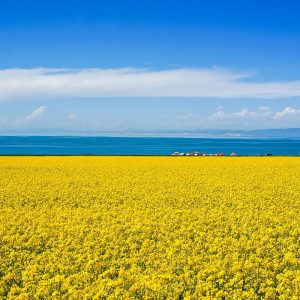
- Climb north out of Xining to the Daban Mountain Viewpoint. On a clear morning the whole Menyuan valley lies below you, yellow with rapeseed in July.
- Stop for the classic view of Gangshika Snow Peak, 5,254.5 m and snow-capped all year, from the Menyuan side of the range.
- Cross the Qilian Mountain Grassland with short photo stops among the yak herds, then descend the northern slope into Gansu.
- Arrive in Zhangye in the evening. If there is daylight left, the Giant Buddha Temple with China’s largest indoor reclining Buddha is a worthwhile short visit.
Good to know: A full mountain day of roughly 500 km with passes close to 3,800 m. Keep exertion gentle, carry a windproof layer, and drink water – mild altitude effects are normal up here.
Day 3 – Zhangye Colourful Danxia – Jiayuguan
Overnight: Jiayuguan
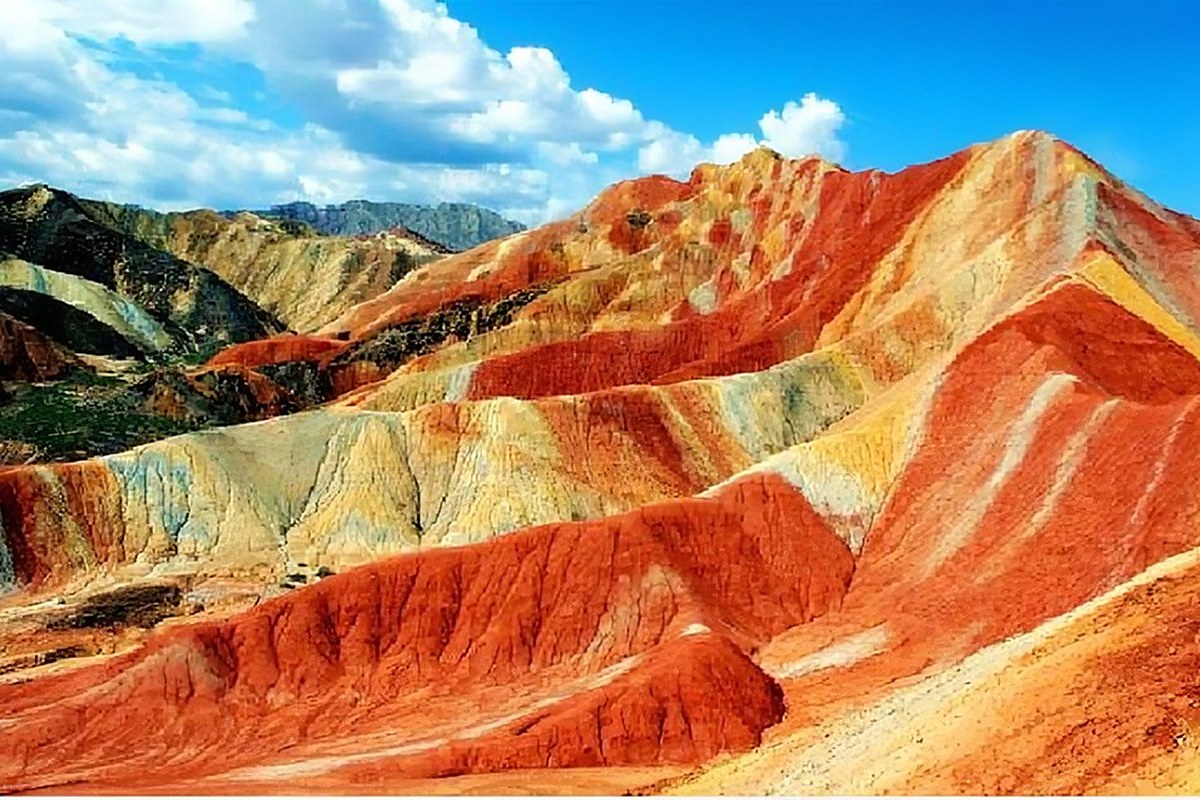
- Spend the morning in the Danxia park at a relaxed pace, working the boardwalk between the four platforms. Platform 1 is quieter and better for portraits.
- Your guide shoots a short aerial clip of the ridges with a drone wherever flying is permitted.
- Follow the corridor west to Jiayuguan in the afternoon, with the snow range on your left and the gobi opening to the north.
- Check in to your Jiayuguan hotel; the evening is free for the grilled-lamb skewer streets the town is known for.
Good to know: Overnighting here is what makes the five-, six- and seven-day versions comfortable: the Great Wall sites get their own morning instead of a passing stop.
Day 4 – Jiayuguan – Dunhuang – Mingsha Mountain & Crescent Moon Spring
Overnight: Dunhuang
- An unhurried morning departure for the 380 km run to Dunhuang across the open gobi.
- Check in to your Dunhuang hotel, then head out in the late afternoon as the heat drops.
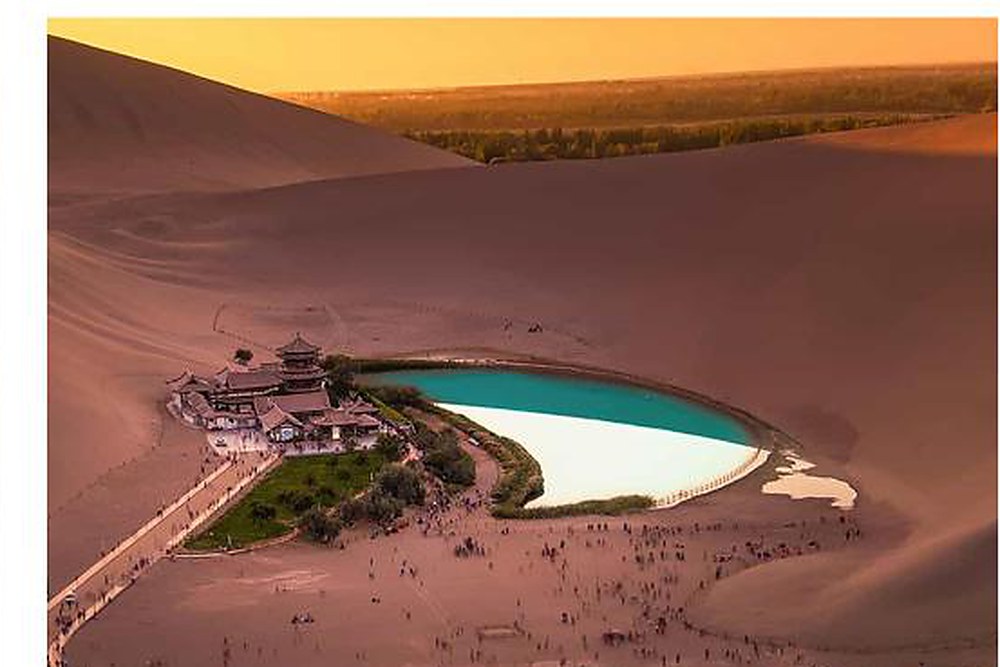
- Climb the singing dunes above Crescent Moon Spring for sunset, with the oasis and its pavilion below the ridge. Your guide leads the short walk and points out the safest line up the sand.
- Return to town for dinner at leisure.
Good to know: Sand-proof shoe covers are useful, and the light is at its best in the last 90 minutes before sunset. Camel rides on the dunes are optional and paid locally.
Day 5 – Mogao Caves – Mingsha Mountain & Crescent Moon Spring
Overnight: Dunhuang
- Your timed Mogao Caves reservation in the morning: two films at the digital exhibition centre, then the shuttle to the cliff and the guided cave visit.
- Lunch and a rest at the hotel through the hottest part of the afternoon – a deliberate pause on the longer itineraries.
- Return to Mingsha Mountain in the late afternoon for the dunes and Crescent Moon Spring in soft light.
- Your Dunhuang Flying Apsaras costume photo session takes place here with a photographer, using the dunes as a backdrop where the light allows.
Good to know: Photography is not permitted inside the caves. The costumed photo session is complimentary and depends on wind and light; your guide confirms the timing on the day.
Day 6 – Yangguan & Yumen Passes – Dunhuang departure
Overnight: Departure
- Drive west out of Dunhuang to the two Han dynasty gates: the Jade Gate at Yumen and the southern Yangguan Pass, once the last checkpoints before the Tarim Basin.
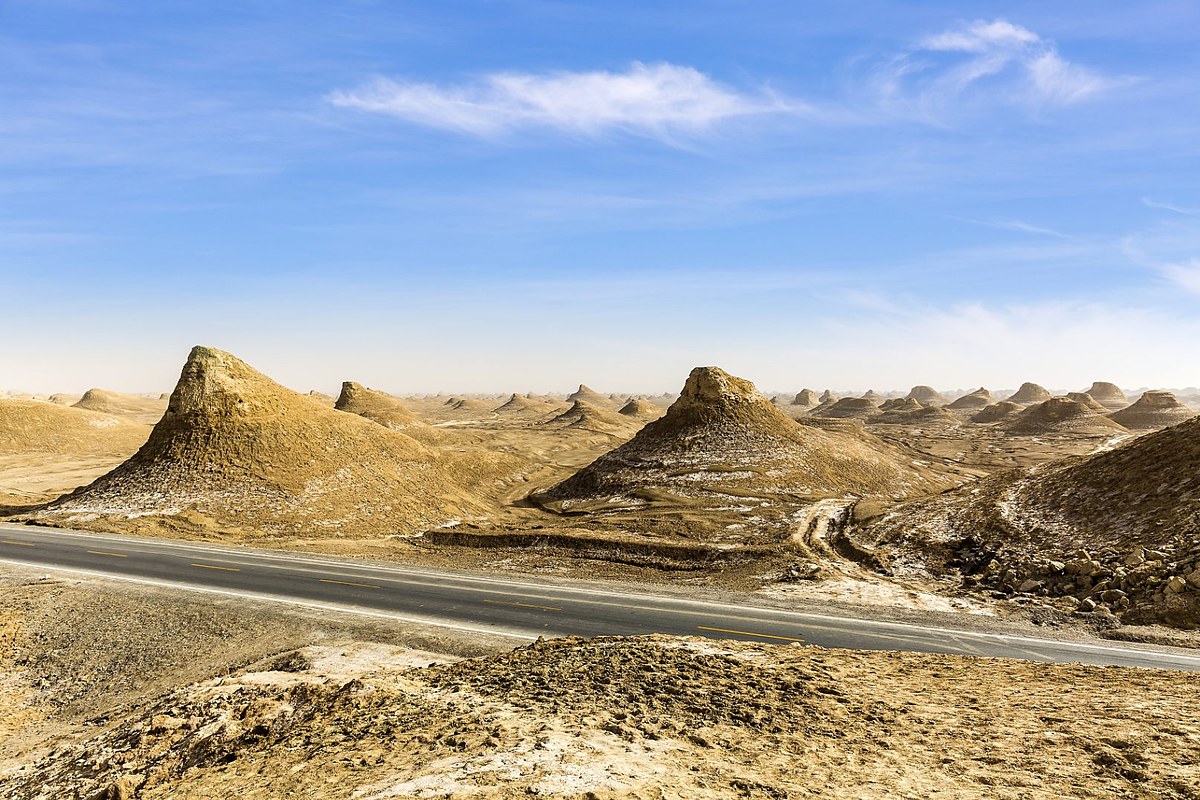
- Walk the rammed-earth ruins and the small museum, with the open desert and the distant yardang country beyond them.
- Return to town for lunch at leisure and any last shopping for local dried fruit or apricot products.
- A private transfer takes you to Dunhuang Airport (DNH) or Dunhuang railway station.
Good to know: This extra western-gates day is what separates the six-day journey from the five-day one. An afternoon or evening departure works best; on very hot days your guide starts early.
The places you will see
Qilian Mountain Grassland. One of China’s finest high grasslands, roughly 26,000 square kilometres at around 3,000 m. In summer it turns green with wildflowers, and yaks and sheep look like pearls scattered across it below the snow range.
Zhangye Colourful Danxia. A national geological park where 24 million years of mineral-rich sandstone have been folded into red, orange, yellow and white bands. Low side-light in the two hours before sunset is what makes the stripes read.
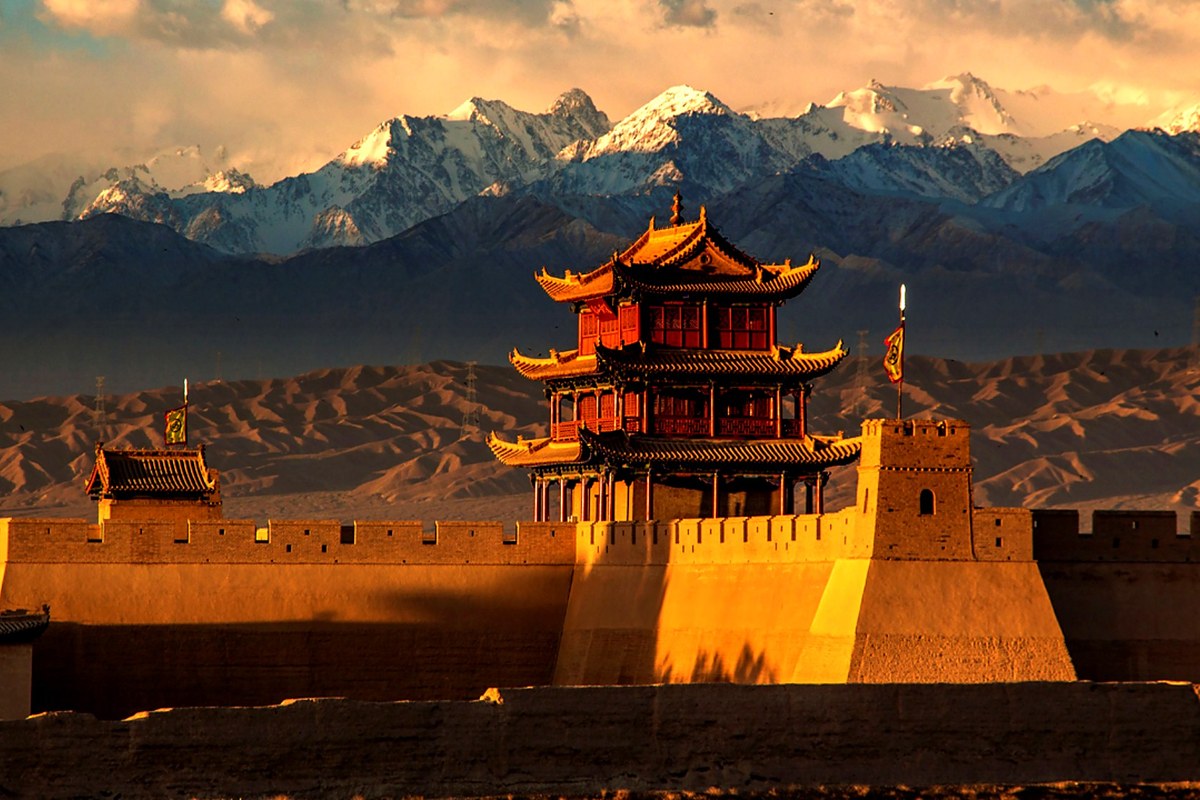
Jiayuguan Pass. The western end of the Ming Great Wall, built in 1372 and known as ‘the strongest pass under heaven’. Three gate towers, a trap courtyard and intact ramparts sit between the Qilian snow peaks and the open gobi.
Mogao Caves. A thousand years of Buddhist wall painting and sculpture in 492 decorated caves cut into a cliff outside Dunhuang. A UNESCO World Heritage Site, visited on a timed reservation with a site guide after two films at the digital exhibition centre.
Mingsha Mountain & Crescent Moon Spring. Singing dunes rising around a crescent-shaped spring that has never silted up. The oasis has refreshed Silk Road travellers for centuries; sunset from the ridge above the water is the classic Dunhuang photograph.
Yangguan & Yumen Passes. The two Han dynasty gates west of Dunhuang – the southern Yangguan and the Jade Gate (Yumen) – that once controlled every caravan leaving China for the Tarim Basin. Their rammed-earth ruins stand in open desert with the Yardang formations beyond.
Complimentary experiences
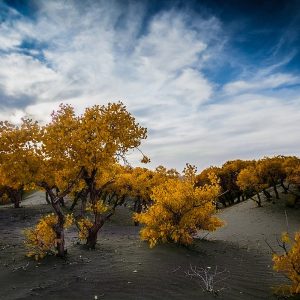
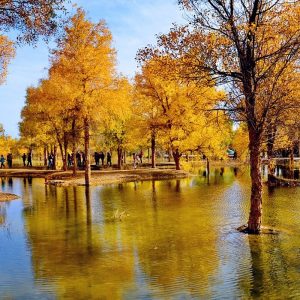
Every journey includes a short drone film shot over the Qilian grasslands and the desert where local rules allow, a Dunhuang Flying Apsaras costume photo session with a photographer, a guided sunset walk on the dunes above Crescent Moon Spring, and bottled water in the vehicle. During the autumn poplar season – roughly late September to mid-October – the seven- and eight-day routes add a guided sunrise or sunset photo session in the poplar forests. All complimentary activities depend on weather and local permits and are confirmed with you before departure.
What is included
- Private luxury 9-seat MPV with a professional driver for every road transfer on the itinerary
- English-speaking local guide throughout the journey
- 24-hour airport or railway-station meet-and-greet in Xining, and a private send-off in Dunhuang
- Hand-picked four-star accommodation with daily hotel breakfast
- All sightseeing stops and first-entry tickets listed in the day-by-day programme
- Mogao Caves timed reservation, the digital exhibition centre films and the site guide
- Dunhuang Flying Apsaras photo experience, drone footage where permitted, and bottled water in the vehicle
- No shopping stops and no compulsory group activities
Good to know
- Open-jaw routing: this journey starts in Xining (XNN airport / Xining station) and ends in Dunhuang (DNH airport / Dunhuang station). Book an open-jaw ticket, not a Xining round trip. Evening flights from Dunhuang work best.
- Altitude changes during the trip: Xining sits at 2,261 m, the Qilian passes reach about 3,800 m, and Dunhuang is only 1,100 m. Take the first day gently, drink water and avoid alcohol on the first evening. If you have a heart or respiratory condition, check with your doctor before booking.
- Sun: UV is extreme on the plateau and on salt or sand, which reflect strongly. Bring SPF 50+ sunscreen, a wide-brim hat, sunglasses and lip balm, plus a windproof layer for the passes and sand-proof shoe covers for the dunes.
- Mogao Caves use named, timed reservations released about 30 days ahead. Send passport details when you book. Exact cave allocation is decided by the site on the day. If standard tickets are unavailable, your guide arranges the best alternative – the Dunhuang Museum or the Western Thousand Buddha Caves – and confirms the change with you first.
- Poplar season: golden foliage normally peaks from late September to mid-October. This is the busiest two weeks of the year in Jinta and Ejina, with limited rooms; book the seven- or eight-day itinerary 45-60 days ahead. Outside the season both routes still work as desert and Great Wall journeys.
- Most lunches and dinners are at leisure so you can eat where you like. Your guide will suggest the local kitchens actually used by residents.
- Flights and trains to Xining and from Dunhuang, travel insurance, visas, personal expenses and anything not listed under ‘What is included’ are not included.
Local flavours
The route eats well and generously. In Qinghai look for aged yoghurt, kang-pot lamb, hand-grabbed mutton, Qinghai hotpot, butter tea and barley cakes; along the corridor try hand-pulled Lanzhou beef noodles, Zhangye’s short hand-rolled cuoyuzi noodles, Jiayuguan charcoal-grilled lamb skewers, Dunhuang donkey-meat yellow noodles, liangpi cold skins and iced apricot-peel drink (xingpishui) to beat the desert heat. Ask your guide to point you to the places locals actually use.