The most ambitious route in the series. From Jiayuguan you cross the empty gobi into Inner Mongolia for the ruined city of Khara-Khoto, the Dead Poplar Forest at sunset, sunrise over Juyan Lake and the great Ejina poplar forest, then return south to finish with Jiayuguan, the Mogao Caves and Crescent Moon Spring. Two long road days are the price of a landscape almost no short itinerary reaches.
Why this trip
- A genuinely private journey: your own vehicle, your own English-speaking guide, no shared group and no shopping stops
- A one-way route – Lanzhou in, Dunhuang out – so you never backtrack along the corridor
- Hand-picked four-star hotels with breakfast, in the right town each night rather than at the end of a long transfer
- A private luxury 9-seat MPV with reclining leather seats, generous legroom and USB charging on every road day
- 24-hour meet-and-greet at Lanzhou Zhongchuan Airport or Lanzhou West railway station, and a private send-off in Dunhuang
- Mogao Caves reservations handled for you, including the digital exhibition centre
- Complimentary drone footage at the Danxia ridges and in the desert, wherever local rules allow
- Complimentary Dunhuang Flying Apsaras photo experience with costume and photographer
- Khara-Khoto, the Dead Poplar Forest, Juyan Lake sunrise and the Ejina poplar forest in one loop
- Two long but well-supported road days into Inner Mongolia, with early starts and water carried on board
Route at a glance
Lanzhou – Zhangye – Colourful Danxia – Jiayuguan – Khara-Khoto – Juyan Lake – Ejina – Dunhuang. Lanzhou in, Dunhuang out – a one-way journey with no backtracking. Travel is by private 9-seat MPV with your own English-speaking guide; on the shortest versions an early high-speed train can replace the first long transfer.
Day by day
Day 1 – Arrival in Lanzhou
Overnight: Lanzhou
- Your journey begins in Lanzhou, the Yellow River city that has guarded the eastern gate of the Hexi Corridor for two thousand years. A team member contacts you the day before with your driver’s name and number.
- 24-hour meet-and-greet at Lanzhou Zhongchuan International Airport (LHW) or Lanzhou West railway station, followed by a private transfer to your hotel.
- Check in to a hand-picked four-star hotel. The rest of the day is yours: walk the Yellow River embankment, cross Zhongshan Bridge, see the old waterwheels, or sit down to a proper bowl of Lanzhou beef noodles.
- For early arrivals there is usually time for the Gansu Provincial Museum and its famous Flying Horse of Gansu. Your guide will fit it in if you would like.
Good to know: Lanzhou sits at about 1,520 m with no altitude risk on this route. Please send passport details early so Mogao Caves tickets can be reserved about 30 days ahead.
Day 2 – Lanzhou – Zhangye – Colourful Danxia
Overnight: Zhangye
- Travel west along the Hexi Corridor by private MPV or high-speed train, roughly 500 km from Lanzhou to Zhangye.
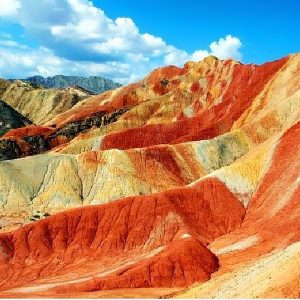
- In the late afternoon enter Zhangye Colourful Danxia National Geological Park. Low side-light is when the red, orange and white mineral bands read most clearly, and the park is at its best in the two hours before sunset.
- Follow the boardwalk loop between the four viewing platforms. Platforms 2 and 4 give the classic wide striped panorama; Platform 1 is quieter and better for portraits.
- Your guide shoots a short aerial clip of the ridges with a drone wherever flying is permitted.
- Return to Zhangye for dinner at leisure.
Good to know: The ridges are fully exposed: SPF 50+, a hat and sunglasses are essential. Drone flying is prohibited in some zones and in high wind; your guide checks on the day.
Day 3 – Zhangye – Jiayuguan Pass – Jiayuguan
Overnight: Jiayuguan
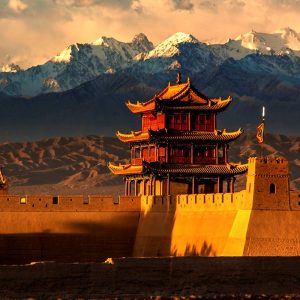
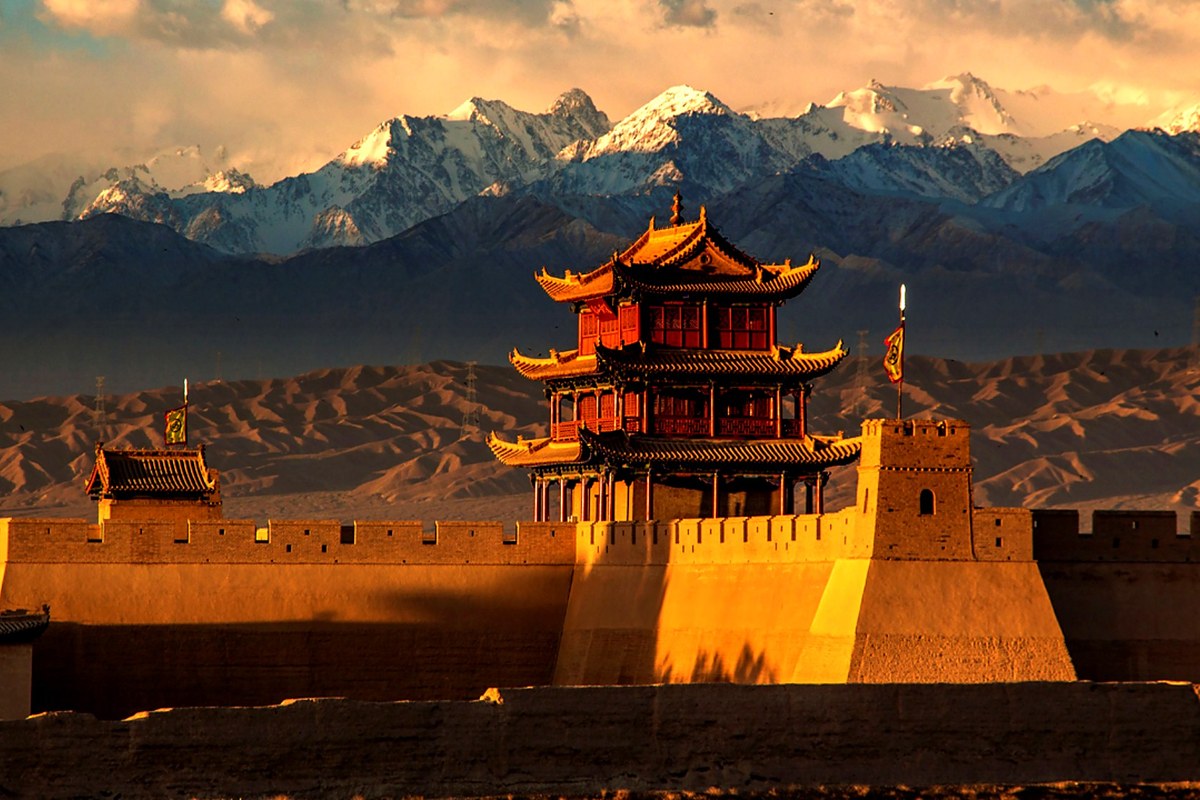
- Drive about 220 km to Jiayuguan and give Jiayuguan Pass a full, unhurried visit: the three gate towers, the trap courtyard, the ramparts and the frontier museum.
- From the top of the wall the Qilian snow peaks, the gobi and the oasis line up in one view – the defining photograph of the Hexi Corridor.
- Optional extra: the Overhanging Great Wall and the First Beacon Tower, about two hours for both.
- An early dinner and a good night’s sleep in Jiayuguan. Tomorrow is the longest drive of the journey, north into Inner Mongolia.
Good to know: We recommend an early start on Day 4. Keep your passport with you – there are checkpoints on the road to Ejina.
Day 4 – Jiayuguan – Khara-Khoto & Dead Poplar Forest – Ruoshui Poplar Forest – Ejina
Overnight: Ejina Banner (Dalaihubu town)
- Cross the gobi north into Inner Mongolia’s Alxa League, roughly 400 km and 5-6 hours. The landscape empties out completely: no towns, only gravel, camel grass and distant ridges.
- Arrive at Khara-Khoto, the ruined Tangut city of the Western Xia that Silk Road travellers knew as the dead city. Its surviving stupas and ramparts stand alone in the desert.
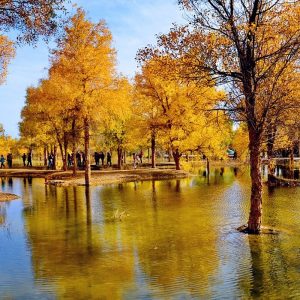
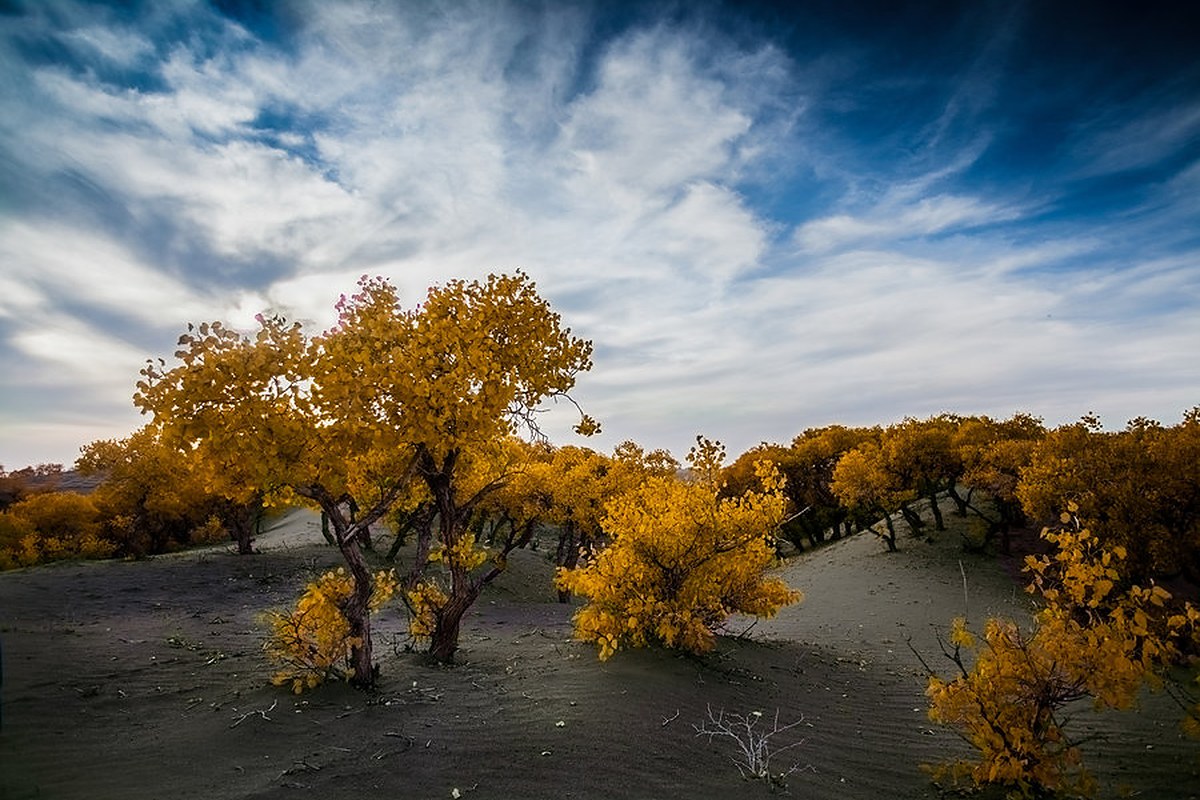
- Continue to the adjacent Dead Poplar Forest, a field of ancient wind-twisted trunks. Sunset here is the most photographed moment of the Ejina season, when the silhouettes go black against an orange sky.
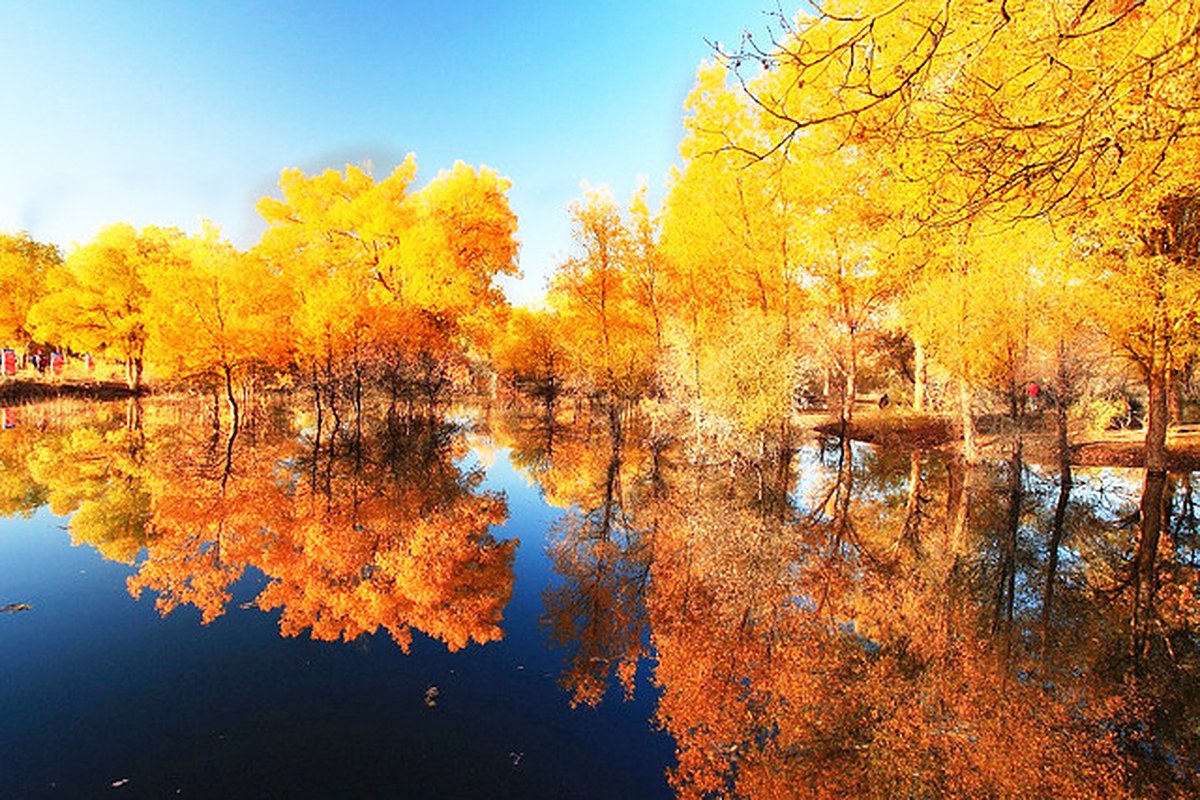
- Time permitting, walk the Ruoshui Poplar Forest along the Heihe River, where living golden poplars grow beside the water.
- Overnight in Dalaihubu, the small county town that serves as the base for Ejina.
Good to know: This is a long road day with simple roadside facilities; we carry water and snacks and stop at the best available rest points. Rooms in Ejina are scarce in October – book 45-60 days ahead.
Day 5 – Ejina – Juyan Lake Sunrise – Ejina Poplar Forest – Jiayuguan
Overnight: Jiayuguan
- A pre-dawn departure for Juyan Lake, where the Heihe River ends. At sunrise the reed beds, open water and migrating birds are extraordinary, and the light changes minute by minute.
- Back to the Ejina Poplar Forest, the largest desert poplar forest in China. Walk the boardwalk from Bridge 1 to Bridge 8: the oldest trees, the densest golden canopy and the dune-edge viewpoints are all here.
- Your guide finds the quieter groves away from the main photography crowds and shoots a short aerial clip where drones are permitted.
- In the early afternoon begin the 400 km return south to Jiayuguan, arriving in the evening.
- Overnight in Jiayuguan to break up the journey before the final push to Dunhuang.
Good to know: Two long days back to back. We start before dawn and keep the pace brisk. If you would prefer a gentler rhythm, we can add a second night in Ejina as a custom change – just ask before you book.
Day 6 – Jiayuguan – Dunhuang – Mingsha Mountain & Crescent Moon Spring
Overnight: Dunhuang
- A roughly four-hour drive west across the gobi to Dunhuang, the last oasis before the desert proper.
- Check in and rest through the hottest part of the afternoon.
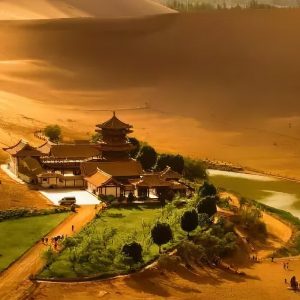
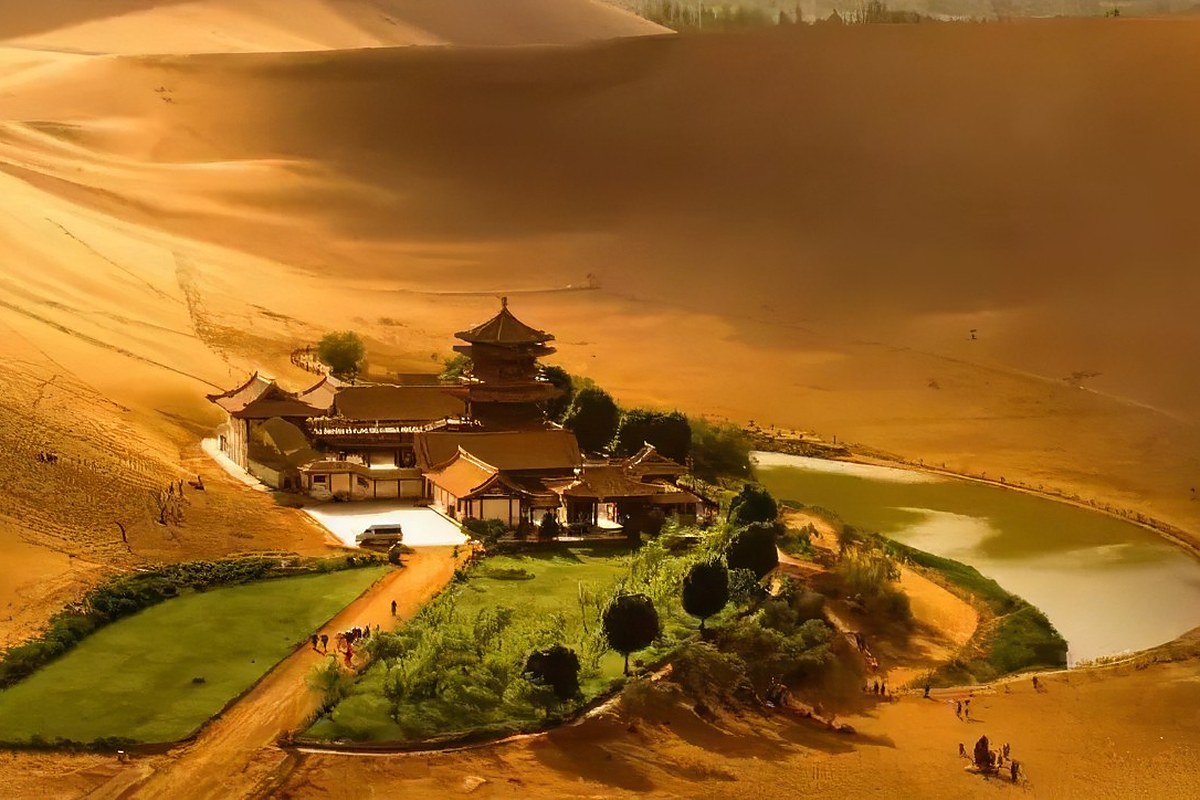
- In the late afternoon head to Mingsha Mountain and Crescent Moon Spring. The sand hums underfoot and the crescent-shaped spring has sat among the dunes for centuries without silting up.
- Walk the ridge above the spring for the classic photograph, watch the camel caravans cross the dune line, and stay for sunset when the sand turns copper and the temperature drops.
- Return to Dunhuang for the evening; Shazhou night market is a short walk from most of our hotels.
Good to know: Go late, not at noon: summer sand is punishing. Sand-proof shoe covers, sunglasses and a light scarf are useful, and layers cover the evening breeze.
Day 7 – Mogao Caves – Dunhuang departure
Overnight: Tour ends in Dunhuang
- Morning visit to the Mogao Caves with a pre-booked timed ticket, starting at the digital exhibition centre with two introductory films.
- A site guide leads a small group through a rotating set of decorated caves spanning a thousand years of Buddhist art on the Silk Road.
- Time afterwards for the Dunhuang Museum or a final bowl of donkey-meat yellow noodles before your transfer.
- Private transfer to Dunhuang Mogao Airport (DNH) or Dunhuang railway station. Your guide stays with you until check-in.
Good to know: Please book an evening flight or train – a midday departure would cut the cave visit short. Passport details are needed about 30 days ahead for the reservation.
The places you will see
Zhangye Colourful Danxia. A national geological park where 24 million years of mineral-rich sandstone have been folded into red, orange, yellow and white bands. It is the most photographed landscape in Gansu, and the light in the two hours before sunset is what makes the stripes read.
Jiayuguan Pass. The western end of the Ming Great Wall, built in 1372 and known as ‘the strongest pass under heaven’. Three gate towers, a trap courtyard and intact ramparts sit between the Qilian snow peaks and the open gobi.
Ejina: Khara-Khoto, Juyan Lake & the poplar forest. North of Jiayuguan in Inner Mongolia: the ruined Western Xia city of Khara-Khoto, the wind-twisted trunks of the Dead Poplar Forest, sunrise over Juyan Lake where the Heihe River ends, and China’s largest desert poplar forest stretching from Bridge 1 to Bridge 8.
Mogao Caves. A thousand years of Buddhist wall painting and sculpture in 492 decorated caves cut into a cliff outside Dunhuang. A UNESCO World Heritage Site, visited on a timed reservation with a site guide after two films at the digital exhibition centre.
Mingsha Mountain & Crescent Moon Spring. Singing dunes rising around a crescent-shaped spring that has never silted up. The oasis has refreshed Silk Road travellers for centuries; sunset from the ridge above the water is the classic Dunhuang photograph.
Complimentary experiences
Every Hexi Corridor itinerary includes a short drone film shot where local rules allow, a Dunhuang Flying Apsaras costume photo session with a photographer, a guided sunset walk on the dunes above Crescent Moon Spring, and bottled water in the vehicle. During the autumn poplar season – roughly late September to mid-October – the six- and seven-day routes add a guided sunrise or sunset photo session in the poplar forests. All complimentary activities depend on weather and local permits and are confirmed with you before departure.
What is included
- Private luxury 9-seat MPV with a professional driver for every road transfer on the itinerary
- English-speaking local guide throughout the journey
- 24-hour airport or railway-station meet-and-greet in Lanzhou, and a private send-off in Dunhuang
- Hand-picked four-star accommodation with daily hotel breakfast
- All sightseeing stops and first-entry tickets listed in the day-by-day programme
- Mogao Caves timed reservation, the digital exhibition centre films and the site guide
- Dunhuang Flying Apsaras photo experience, drone footage where permitted, and bottled water in the vehicle
- No shopping stops and no compulsory group activities
Good to know
- Open-jaw routing: this journey starts in Lanzhou (LHW airport / Lanzhou West station) and ends in Dunhuang (DNH airport / Dunhuang station). Book an open-jaw ticket, not a Lanzhou round trip. Evening flights from Dunhuang work best.
- Altitude is not an issue here: the whole corridor runs between roughly 1,100 and 1,700 m, far lower than the Qinghai plateau. No acclimatisation is needed.
- The climate is dry with very strong UV and a large day-to-night temperature swing. Bring SPF 50+ sunscreen, a wide-brim hat, sunglasses, lip balm, a windproof layer and comfortable shoes. Sand-proof shoe covers are useful at Mingsha Mountain.
- Mogao Caves use named, timed reservations released about 30 days ahead. Send passport details when you book. Exact cave allocation is decided by the site on the day. If standard tickets are unavailable, your guide arranges the best alternative – the Dunhuang Museum or the Western Thousand Buddha Caves – and confirms the change with you first.
- Poplar season: golden foliage normally peaks from late September to mid-October. This is the busiest two weeks of the year in Jinta and Ejina, with limited rooms; book the six- or seven-day itinerary 45-60 days ahead. Outside the season both routes still work as desert and Great Wall journeys, and we can substitute the Yulin Caves or a deeper Jiayuguan day.
- Most lunches and dinners are at leisure so you can eat where you like. Your guide will suggest the local kitchens actually used by residents.
- Flights and trains to Lanzhou and from Dunhuang, travel insurance, visas, personal expenses and anything not listed under ‘What is included’ are not included.
Local flavours
The corridor eats well and generously. Look for hand-pulled Lanzhou beef noodles at breakfast, hand-grabbed mutton, Zhangye’s short hand-rolled cuoyuzi noodles and chao pao, Jiayuguan charcoal-grilled lamb skewers, Dunhuang donkey-meat yellow noodles, camel meat, liangpi cold skins, sweet grey-bean soup and iced apricot-peel drink (xingpishui) to beat the desert heat. Ask your guide to point you to the places locals actually use.